

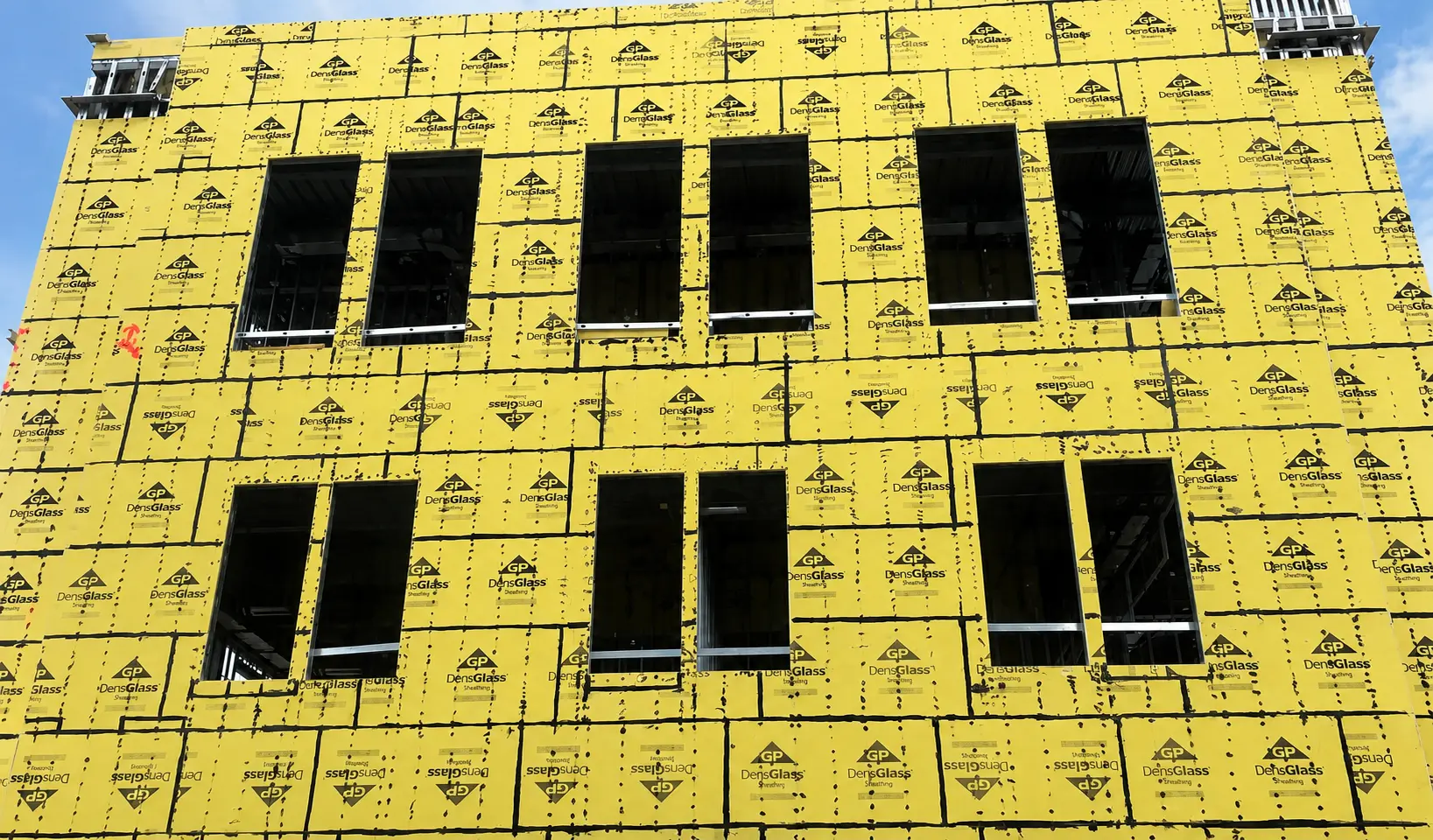
Air barrier systems are designed to control air movement through the building envelope, creating a continuous seal across walls, transitions, and penetrations. These systems play a critical role in maintaining interior environmental conditions by limiting uncontrolled airflow between the exterior and interior of a structure.
When properly installed, an air barrier improves overall building performance by enhancing energy efficiency, reducing moisture migration, and supporting the durability of surrounding materials.
WHY AIR BARRIER SYSTEMS ARE IMPORTANT
Uncontrolled air movement is a major contributor to energy loss and moisture-related issues within a building. Air leakage can carry moisture into wall assemblies, leading to condensation, material deterioration, and reduced insulation performance.
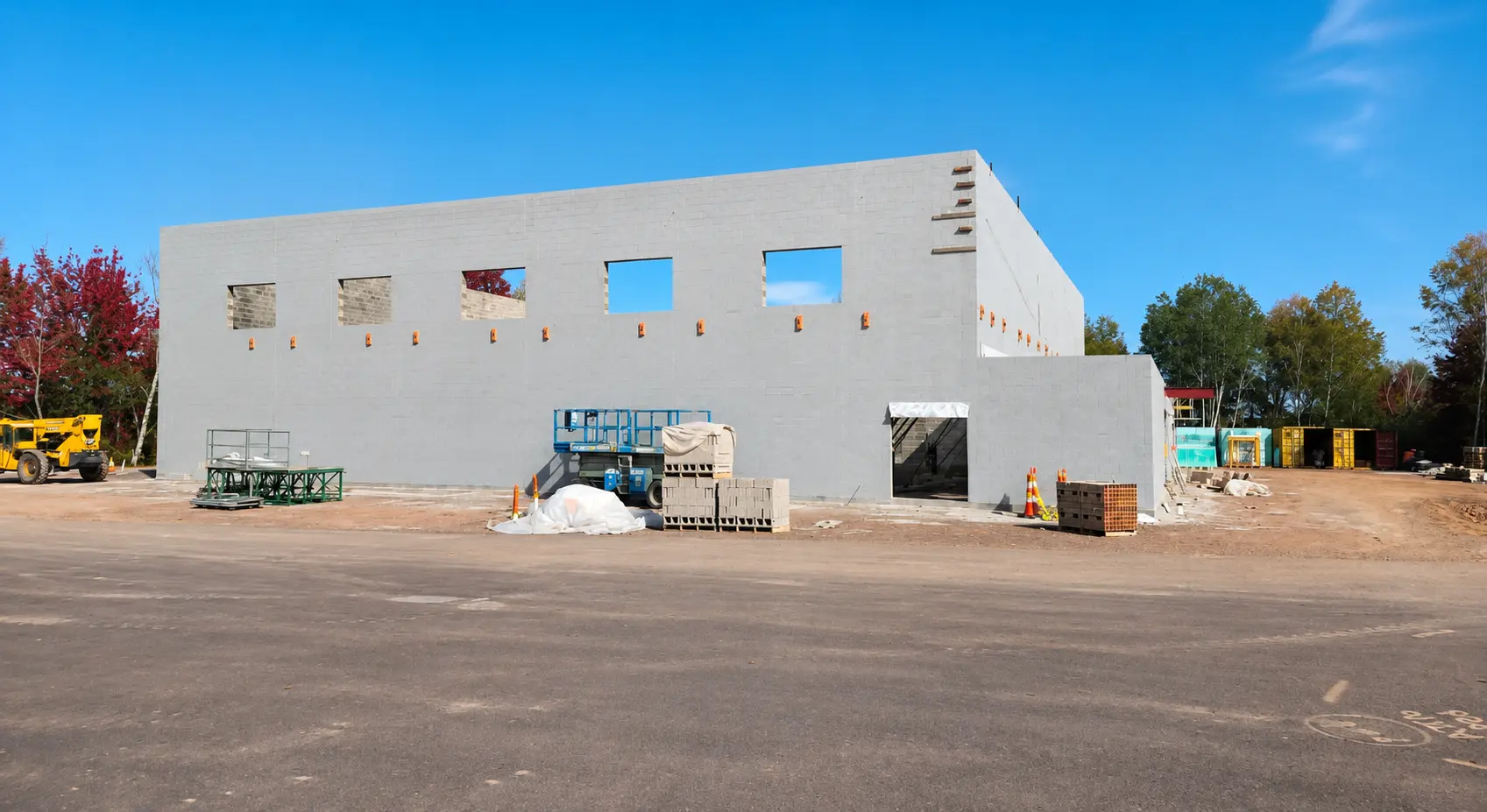
A properly functioning air barrier helps stabilize interior conditions, improve thermal efficiency, and protect the structure from long-term damage. By controlling airflow, the system reduces strain on HVAC systems and supports consistent building performance throughout changing environmental conditions.
HOW WE INSTALL AIR BARRIER SYSTEMS
Our process begins with evaluating the substrate and identifying all areas requiring continuity, including joints, transitions, and penetrations. Surfaces are cleaned and prepared to ensure proper adhesion.
The air barrier is then applied to create a continuous, uninterrupted seal across the building envelope. Critical areas such as windows, doors, and mechanical penetrations are detailed to maintain system integrity. Application methods vary based on project requirements but are executed to ensure uniform coverage and performance.
The completed system is inspected for continuity and performance, resulting in a fully integrated air barrier designed to control air movement and support long-term building efficiency.